How a copper discovery at Burra rescued colonial South Australia — and what survives today.
The mine that built a state
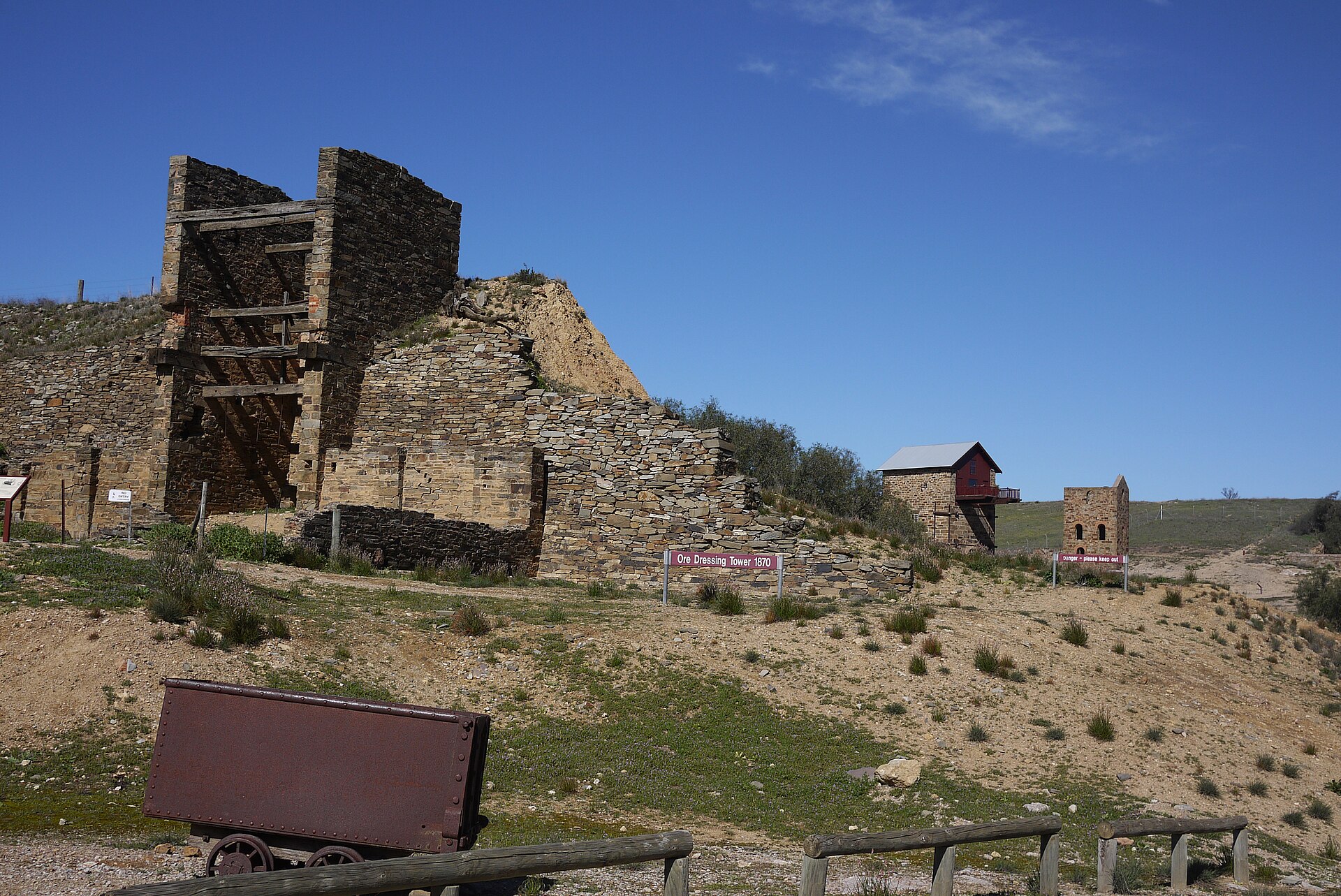
In 1845, shepherds stumbled on copper at Burra, north-east of the Clare Valley. The find could hardly have been better timed: the young colony of South Australia was teetering toward bankruptcy, and the "Monster Mine" — the Burra Burra mine — quickly became one of the largest in the world, its copper exports propping up the colony's fragile economy.
A town of many peoples
Burra drew Cornish, Welsh, Scottish and German miners, who built the rows of cottages and the Cornish-style engine houses that still define the town. Some families, unable to find or afford housing, dug homes into the soft banks of Burra Creek — the miners' dugouts that you can still visit today.
Walk the Heritage Passport
The best way to explore is the Burra Heritage Passport: buy a key and a guidebook from the visitor centre and it unlocks eight historic sites, including the open-cut mine, the dugouts, Redruth Gaol (another Picnic at Hanging Rock location) and the Bon Accord mine museum. Together they make up one of the most complete and atmospheric mining landscapes in Australia — a half-day, easily, for anyone curious about how copper shaped the colony.