Heritage & History
Copper, convicts & colonial stone
The best heritage & history in Clare Valley
The Clare Valley wears its 19th-century history in its stone: Jesuit cellars at Sevenhill, the grand Georgian rooms of Martindale Hall, and the copper-mining heritage of nearby Burra. Self-guided heritage trails string together churches, cottages, mine sites and museums across the district.
Read our guide to heritage & history ↓Browse heritage & history by area
Map shows the 24 places on this page.
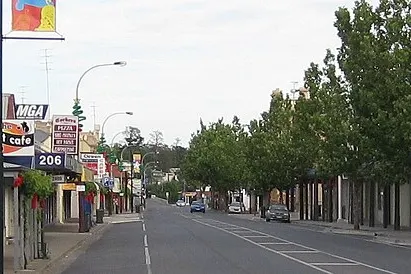
Auburn Heritage Walk
View →A self-guided stroll through the National Trust-listed stone village of Auburn at the valley's south.
Blyth Cinema
View →A volunteer-run picture house in a heritage-listed lodge.
Since 2005, the little town of Blyth has run its own cinema inside a heritage-listed former Masonic lodge, screening new releases with proper Dolby sound and country hospitality.
Bon Accord Mine Museum $
View →A Burra museum telling the story of the town's water and mining history on a former mine site.
Bungaree Station
View →A historic 1840s pastoral station north of Clare, a self-contained heritage village offering accommodation and tours.
Burra Heritage Passport
View →A self-guided trail unlocking eight historic copper-mining sites across Burra, including the mine, gaol and creek dugouts.
Burra Miners Dugouts
View →The eroded creekbank hollows where up to 1,800 Cornish miners and their families once lived in the 1850s, dug into the soft clay.
Burra Monster Mine
View →The open-cut Burra Burra copper mine that saved colonial SA - an open-air museum of engine houses, chimneys and powder magazine.
Burra Railway Station
View →A handsome 19th-century station from Burra's days as a rail terminus.
Burra Regional Art Gallery
View →A year of exhibitions in the 1860 telegraph office.
Burra's volunteer-run regional gallery mounts a dozen exhibitions a year in the restored 1860 Post and Telegraph Office - the building that flashed news of Stuart's crossing in 1862.
C.J. Dennis Memorial
View →Auburn's tribute to the laureate of the larrikin.
A blue granite drinking fountain in Auburn honours C.J. Dennis, author of The Songs of a Sentimental Bloke, who was born in the town in 1876.
Farrell Flat Silo Art
View →A 30-metre mural of the town's last train.
Painted in 2020 by Adelaide artists Jarrod Soden and Matthew Knights, Farrell Flat's towering silo mural depicts the last train to pass through the township, glowing against a sunset.
Hampton Township Ruins
View →A vanished English village on the edge of Burra.
Laid out in 1857 and abandoned by 1960, the village of Hampton survives as evocative stone ruins on Burra's outskirts - a National Trust heritage area within the Heritage Passport.
Horrocks Monument
View →A monument to explorer John Horrocks, the European founder of Penwortham.
Magpie & Stump Hotel
View →Mintaro's bullock-driver pub, pouring since 1850.
Completed in 1850 at the entrance to Mintaro, the Magpie & Stump served the bullock drivers of the Burra copper route and still welcomes travellers with pub meals and a beer garden.
Market Square Museum $
View →A perfectly preserved 1880s general store and home in Burra, frozen in time and crammed with the goods of everyday colonial life.
Martindale Hall
View →A grand 1880 Georgian manor near Mintaro, a film and TV icon known for Picnic at Hanging Rock, open for tours.
Martindale Hall Grounds
View →The stately grounds around the Clare Valley's grandest colonial mansion.
Midnight Oil House
View →The lone farmhouse from the Diesel and Dust cover.
The abandoned stone farmhouse on the cover of Midnight Oil's 1987 album Diesel and Dust stands beside the Barrier Highway just north of Burra - one of Australia's most photographed ruins.
Mintaro Village
View →A near-perfectly preserved slate village and State Heritage Area.
Old Police Station & Courthouse Museum
View →Clare's first public building, now a National Trust museum.
Built in 1850 as Clare's first police station and courthouse, this stone building on the corner of Neagles Rock Road and Victoria Road now houses the town's National Trust museum.
Paxton Square Cottages $$
View →A row of restored 1850s miners' cottages in Burra, now heritage self-contained accommodation.
Penwortham St Marks Church
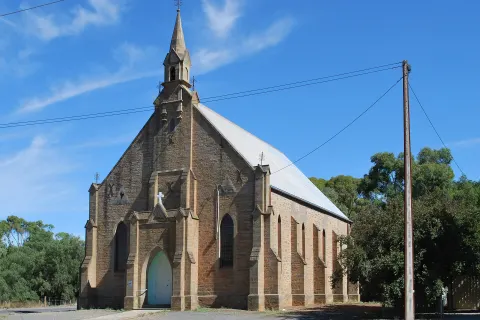
View →A small 1850s stone church in Penwortham, resting place of Clare Valley pioneer John Horrocks.
Polish Hill River Church Museum
View →The 1871 church of Australia's first Polish settlers.
The stone church of St Stanislaus Kostka, consecrated in 1871 by Australia's first Polish community, now houses a museum telling the story of Polish settlement in South Australia.
Redruth Gaol $
View →South Australia's first country gaol, a stark stone ruin on the Burra Heritage Passport trail and a film location for 'Breaker Morant'.
About heritage & history in Clare Valley
Few regions in Australia wear their history as visibly as the Clare Valley. To the east, the copper-mining town of Burra is one of the country's most complete 19th-century mining landscapes - its self-drive Heritage Passport unlocks the Monster Mine, the creekbank miners' dugouts and the stark ruin of Redruth Gaol.
Closer to the vines, the village of Mintaro preserves one of the most intact slate-built streetscapes in the nation, with the grand Georgian mansion of Martindale Hall nearby. At Sevenhill, the Jesuit church and cellars tell the story of the Austrian priests who planted the valley's first vines in 1851.
This deep heritage is woven right through the region, so a day of wine tasting can easily fold in colonial cottages, pioneer churches and pioneering mines. Many sites are free to visit and open year-round.
Heritage & History in Clare Valley - frequently asked questions
What is the Clare Valley known for when it comes to heritage and history?
The Clare Valley is one of the most visibly historic regions in Australia, telling its story through 19th-century stone - from German and Irish settler cottages to Jesuit cellars and copper-mining ruins. Highlights include Sevenhill Cellars, the region's oldest winery founded by Jesuit priests in 1851, the grand Georgian mansion of Martindale Hall at Mintaro, and the nationally significant copper-mining landscape at nearby Burra. Mintaro is South Australia's first heritage-listed town, its cottages built from locally quarried slate.
How do I explore the historic copper-mining sites at Burra?
The best way is the Burra Heritage Passport, a self-drive trail picked up from the Burra & Goyder Visitor Information Centre at 2 Market Square. The passport includes a key that unlocks 11 locked National Heritage-listed sites - including the Monster Mine, Morphett's Engine House and Redruth Gaol - plus a guide to historic sites along an 11 km driving route. The key is valid for up to two days, so you can spread your visit across a weekend.
Can I visit Sevenhill Cellars and its historic church?
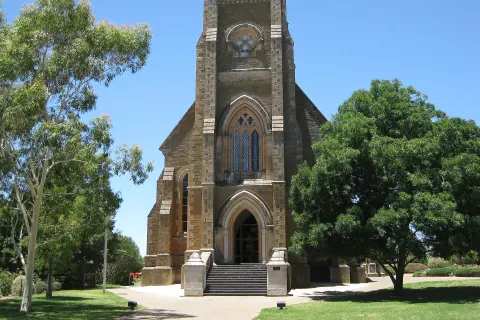
Yes - Sevenhill Cellars, the Clare Valley's oldest winery, has a cellar door open seven days a week from 10am to 5pm, set on a tree-lined property alongside the landmark St Aloysius Church. Walking tours take in the church and its underground crypt, the historic Underground Cellar and the oldest vines in the valley. Bookings generally are not required unless your group has eight or more people.
Is Martindale Hall worth visiting, and when is it open?
Martindale Hall is a grand Georgian sandstone mansion near Mintaro, built around 1879 to 1880, and famous as a filming location for the 1975 Australian classic Picnic at Hanging Rock. It operates as a living-museum house, open most days from 10am to 4pm but closed on Tuesdays, so it is worth checking current hours before you go. Allow time to wander the surrounding heritage town of Mintaro with its slate cottages.
When is the best time to explore the Clare Valley's heritage trails on foot?
Autumn and spring are ideal, with milder temperatures that suit walking the open-air mine sites at Burra and the slate streetscapes of Mintaro and Auburn, which can be hot in summer. Many heritage sites link to the wider Riesling Trail, a 35 km sealed former railway path connecting townships like Auburn, Watervale, Sevenhill and Clare. Cooler months also make exploring the grand stone interiors and self-guided town walks more comfortable.