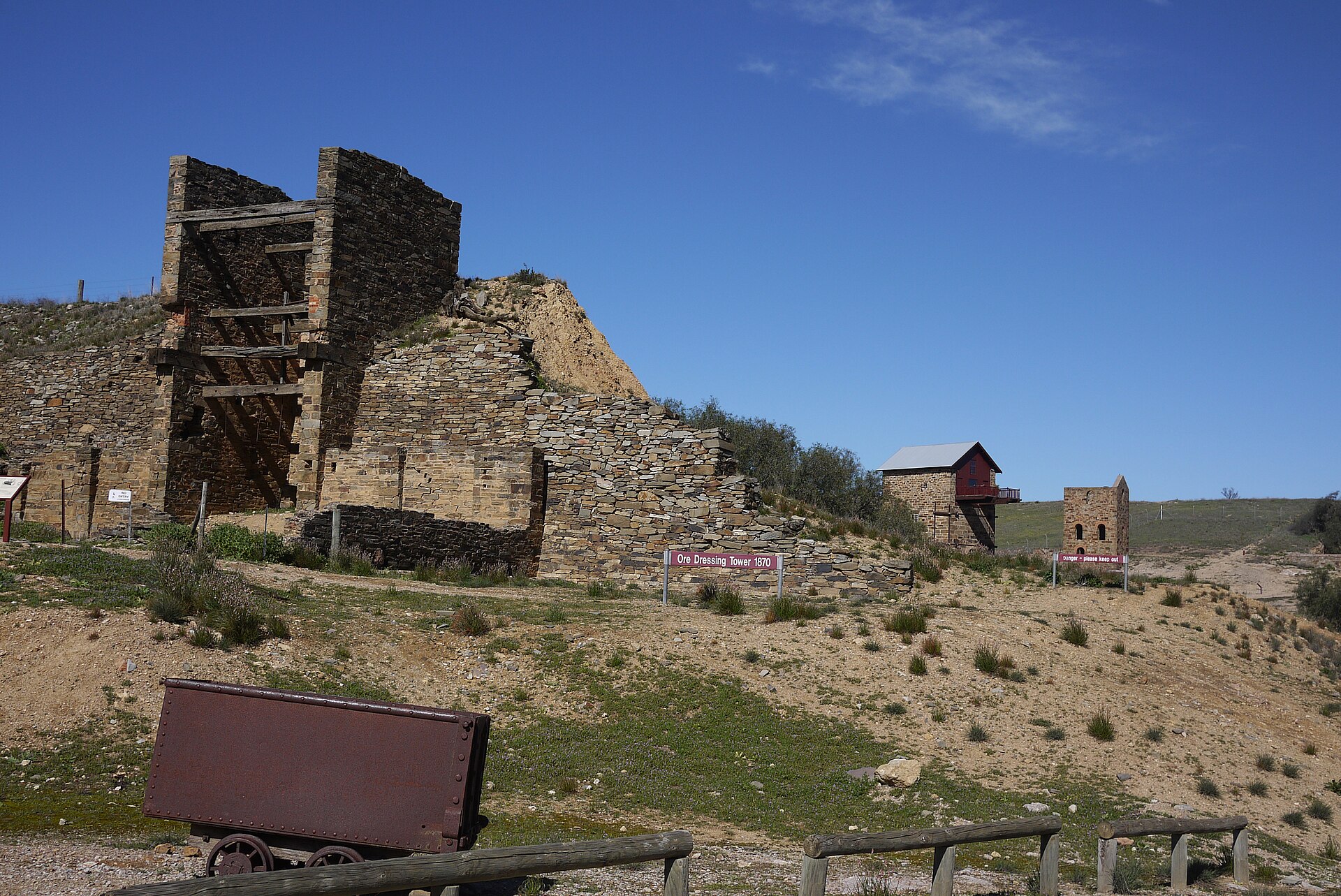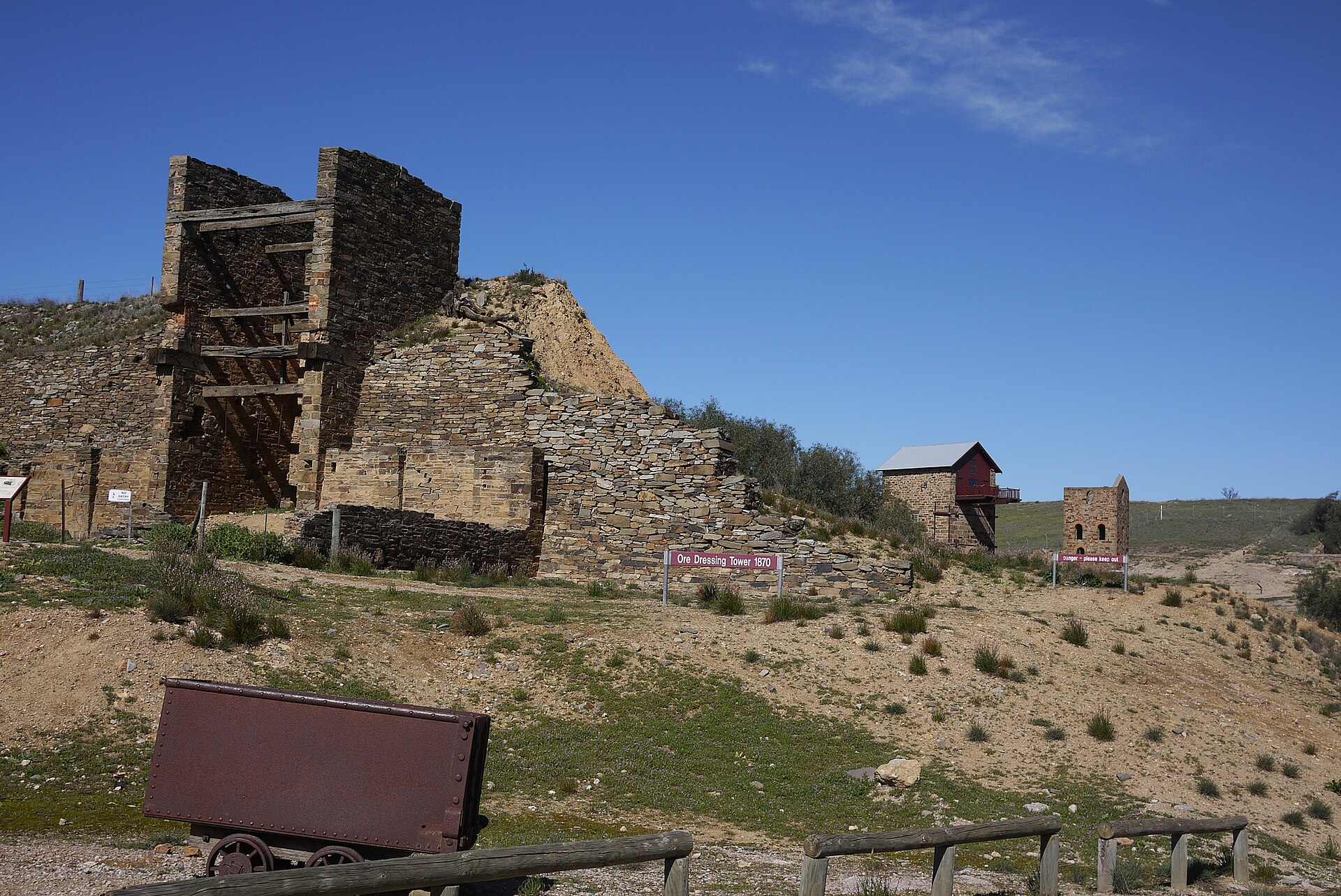
Burra's Monster Mine was once one of the richest in the world. Its copper, and the Cornish miners who dug it, helped keep an infant colony afloat. The story is written all over the town.
A colony in trouble
In the early 1840s, the young colony of South Australia was teetering toward bankruptcy. What rescued it was, improbably, copper - and the richest of the new finds was at Burra, north of the Clare Valley, where a discovery in 1845 opened what became known as the Monster Mine. Within a few years it was among the most productive copper mines on earth.
The Cornish come
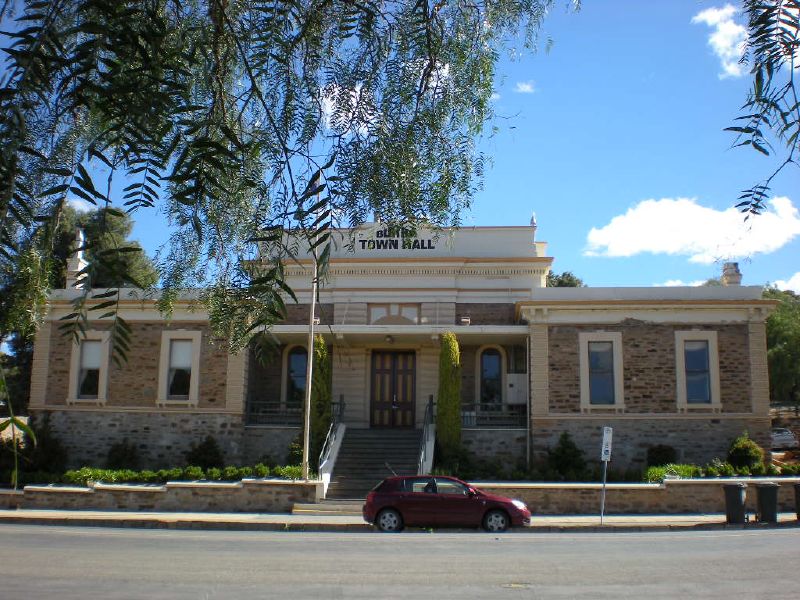
The mine drew experienced hard-rock miners from Cornwall, along with Welsh smelters and German farmers, and the town that grew up around the workings carried their imprint. Many lived in dugouts cut into the banks of the Burra Creek, while company towns with names like Redruth and Aberdeen sprang up nearby. The Cornish influence still echoes in the town's stone architecture and its festivals.
Walking the story today
The extraordinary thing about Burra is how much survives. The Burra Heritage Passport hands you a key and a map to the locked historic sites - the open-cut Monster Mine, the preserved creek dugouts, the gaol, and museums like Bon Accord that tell the human side. You can even sleep in a restored miner's cottage at Paxton Square.
A boom that faded
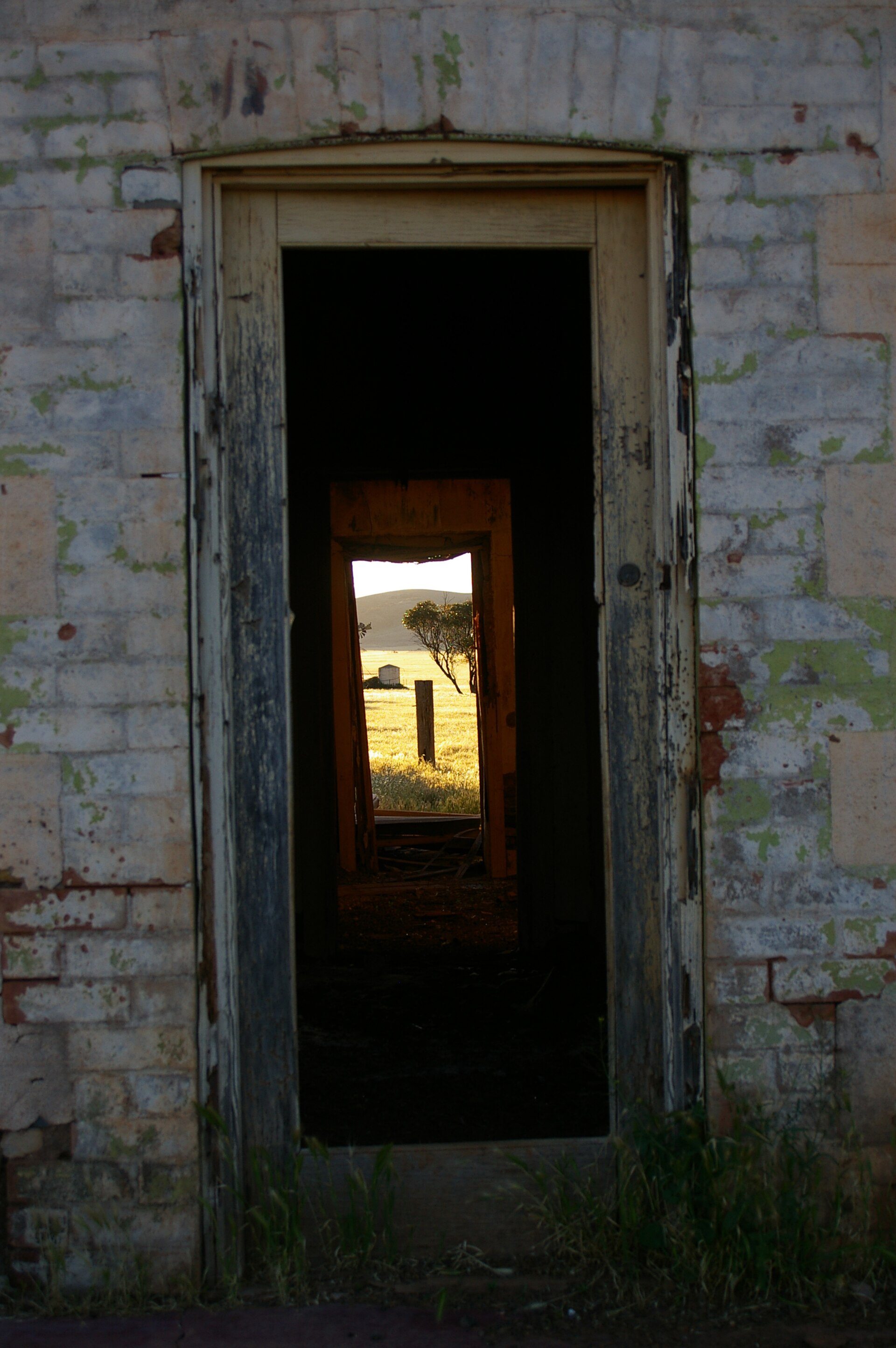
The copper eventually ran thin, the mine closed, and Burra settled into a long quiet. But that very stillness preserved it, leaving one of Australia's most complete mining-era towns. A day here is a day inside the story of how a colony pulled itself back from the brink.